Tuesday, April 29, 2014

Evolution of the Toothbrush


Posted on by

Simple Sticks
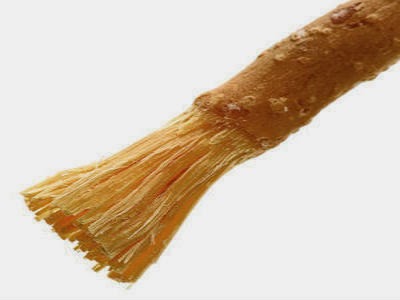
All the way back to around 3500 BC, Egyptians and Babylonians chewed on sticks.  What else did they have to do all day, back before the Internet?  But it turns out that these sticks actually served a purpose.  By chewing on one end until the fibers formed a small make-shift brush, people could clean the surfaces of their teeth.
Then people discovered Miswak, an herbal chewing stick with healing and antiseptic qualities.  In fact, studies prove that Miswak is superior to the present day toothbrush, and many people prefer it even today!  Curious? Try them out! You can buy them online here: (http://www.miswakstick.com/)
Miswak Toothbrush
Animal Hairs
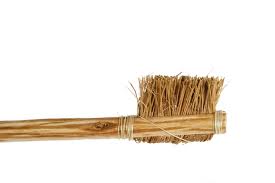
Around 1500, Chinese dentists stole the hairs right off of an animal’s back!  They would pluck hairs off of cold climate pigs and paste them to a bamboo stick or animal bones.
Other primitive versions of the toothbrush include bird feathers, animal bones, porcupine quills, and boar bristles on a bamboo stick.
Animal Hair Toothbrush
The Modern Toothbrush
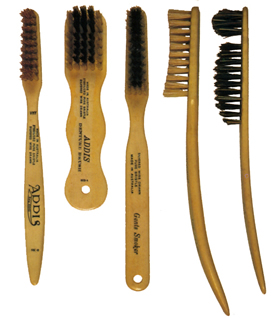
Then William Addis came to save the day.  As an inmate in prison, Addis used bones left over from his dinner and bristles that a generous guard provided him to create a toothbrush.  Upon his release, he refined his invention to use cow tail hair drilled and tied to a cow bone.  He then began mass producing his toothbrush and selling it all over the world.
His company still exists today, although they’ve moved beyond oral hygiene. 
William Addis Toothbrushes
The World Wars
Isn’t it hard to believe that the daily routine of brushing your teeth, as we know it today, began such a short time ago?
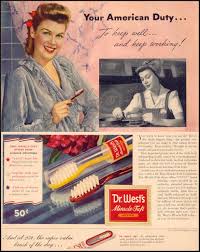
Brushing your teeth only became popular in the US after soldiers returned home.  During the war, our government had strict requirements for soldiers regarding their oral hygiene.  Brushing your teeth was a hard habit to break, and soldiers brought it home with them. 
During the war, bones weren’t always easy to come by, so handles were made from celluloid.  Then, in 1938, a company called DuPont de Nemours introduced the first nylon bristles. DuPont de Nemours used a support-the-troops marketing campaign, and people were hooked.
American Duty 1
Electric Toothbrushes
Even though it seems like electric toothbrushes are a more recent fad, the first one was invented in Switzerland in 1939, but it wasn’t introduced to the public market until the 1960s.
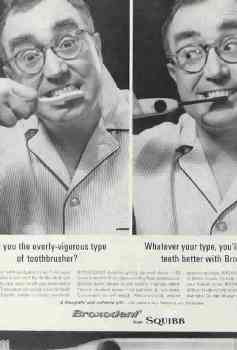
Originally, electric toothbrushes were intended for the “overly-vigorous type of toothbrushers.”
Overly Vigorous
What can your toothbrush do?
Today, there are over 3000 patents for toothbrushes, and they can do just about anything you want them to do.
The Oral-B Triumph 9100 with SmartGuide wirelessly transmits a map of your mouth to an LCD display and then tells you where you still need to brush and areas that need more attention.
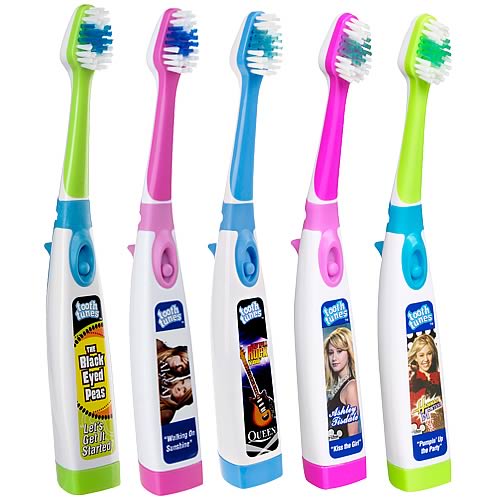
Tooth Tunes uses sound waves to play a song for 2 minutes.  Once the song is over, you know when to stop.
Tooth Tunes
Today, you could spend hours in the toothbrush aisle mulling over all of the choices.  Which toothbrush do you think is the best? Which one gets your kid excited to brush their teeth? Does yours do any cool tricks? 

1-877-Dr Teeth- (360) 740-6212
Town Center Dental
3 Locations - Chehalis, Wa -- Rochester, Wa -- Rainier, Or

Sunday, April 13, 2014

5 Habits That Destroy Your Smile


Academy of General Dentistry spokesperson Steven A. Ghareeb, DDS, FAGD, offers advice on how to keep your smile healthy and pretty by avoiding these five bad oral health habits.

1. Not flossing
Brushing your teeth twice a day is important, but many patients don't realize that flossing at least once a day is just as critical to achieving—and maintaining—a healthy smile. Flossing removes the cavity-causing bacteria left behind from food particles that get stuck between teeth. "Although bleeding and irritation sometimes can occur when you first start flossing, it's important to keep at it," says Dr. Ghareeb. "Your gums will toughen up and your oral health will be better for it."
 

2. Brushing too soon after eating
Consuming acidic foods and beverages, such as sports and energy drinks, citrus fruits, wine, and tomatoes, can erode tooth enamel—the glossy outer layer of the tooth. Brushing your teeth too soon after eating and drinking these items can cause more damage because you are essentially brushing the acid into the teeth, not getting rid of it. Instead, you should rinse your mouth with water after consuming acidic foods and beverages and wait at least 30 minutes before brushing your pearly whites!
 

3. Not replacing your toothbrush often enough
Not only are old toothbrushes ineffective, but they also harbor harmful bacteria that can cause infections. Toothbrushes should be changed every three to four months. "It's also important to change your toothbrush after you've had a cold," says Dr. Ghareeb.
 

4. Excessively bleaching your teeth
Overzealous bleaching can cause your teeth to look unnaturally white and increase tooth sensitivity. Before using an at-home bleaching product, talk to your dentist. "He or she can advise you on proper use of these products as well as which type of bleaching system will provide you with the best results," says Dr. Ghareeb.
 

5. Using a hard-bristled toothbrush
A hard-bristled toothbrush coupled with an aggressive brushing technique can cause irreversible damage to your gums. Use a soft toothbrush and gently brush your teeth at a 45-degree angle, in a circular motion. Using a back-and-forth, sawing motion causes the gums to recede, and can expose the root of the tooth, making teeth extremely sensitive.

Source: http://www.knowyourteeth.com/infobites/abc/article/?abc=5&iid=184&aid=11069

Sunday, March 16, 2014

10 Tips for Healthy, White Teeth


Not only do your teeth help you talk and chew, they can make or break your appearance. Here are 10 secrets for keeping your pearly whites in tip-top shape

  • 1 / 10

1. Go on a white-teeth diet.

If you're quaffing red wine and black tea, or smoking cigarettes or cigars, expect the results to show up as not-so-pearly whites. Other culprits to blame for dingy teeth include colas, gravies, and dark juices. Bottom line: If it's dark before you put it in your mouth, it will probably stain your teeth. Brush immediately after eating or drinking foods that stain teeth and use a good bleaching agent, either over-the-counter or in the dentist's office. For convenient teeth-cleaning action, eat an apple.

  • 2 / 10

2. Chuck your toothbrush...

...or change the head of your electric toothbrush at least every two to three months. Otherwise, you're just transferring bacteria to your mouth. According to Beverly Hills dentist Harold Katz, D.D.S., the best way to brush is by placing your toothbrush at a 45-degree angle against your gums and gently moving it in a circular motion, rather than a back-and-forth motion. Grip the toothbrush like a pencil so you won't scrub too hard.

  • 3 / 10

3. Clean your tongue.

Use a tongue scraper every morning to remove tongue plaque and freshen your breath. One major cause of bad breath is the buildup of bacteria on the tongue, which a daily tongue scraping will help banish. Plus, using a tongue scraper is more effective than brushing your tongue with a toothbrush, says Dr. Katz.

  • 4 / 10

4. Eat 'detergent' foods.

Foods that are firm or crisp help clean teeth as they're eaten. We already mentioned apples (otherwise known as nature's toothbrush); other choices include raw carrots, celery, and popcorn. For best results, make 'detergent' foods the final food you eat in your meal if you know you won't be able to brush your teeth right after eating.

  • 5 / 10

5. Gargle with apple cider vinegar.

Do this in the morning and then brush as usual. The vinegar helps help remove stains, whiten teeth, and kill bacteria in your mouth and gums.


  • 6 / 10

6. Brush your teeth with baking soda once a week

This will remove stains and whiten your teeth. Use it just as you would toothpaste. You can also use salt as an alternative toothpaste. Just be sure to spit it out so it doesn't count as sodium intake! Also, if your gums start to feel raw, switch to brushing with salt every other day.

  • 7 / 10

7. Stay fresh.

To check the freshness of your breath, lick your palm and smell it while it's still wet. If you smell something, it’s time for a sugar-free breath mint. Shopping for mouthwash? Make sure it is alcohol-free. Most over-the-counter mouthwashes have too much alcohol, which can dry out the tissues in your mouth, making them more susceptible to bacteria.

  • 8 / 10

8. Practice flossing with your eyes shut.

If you can floss without having to guide your work with a mirror, you can floss in your car, at your desk, while in bed, and before important meetings. In which case, buy several packages of floss and scatter them in your car, your desk, your purse, your briefcase, your nightstand.

  • 9 / 10

9. Brush your teeth when you first get out of bed and before you get back in at night.

They're the two most crucial times, says Kathleen W. Wilson, M.D., an internist at the Ochsner Health Center in New Orleans and author of When You Think You Are Falling Apart. That’s because saliva (which keeps cavity-causing plaque off teeth) dries up at night, so it’s best to have all plaque cleaned off the teeth before sleep. It’s also important to brush first thing in the morning to brush off plaque and bacteria (morning breath!) that may have built up as you slept.

  • 10 / 10

10. Conceal with color.

Ladies: Choose a medium coral or light red lipstick. These colors make your teeth look whiter, whereas lighter-colored lipsticks tend to bring out the yellow in teeth.


To read more http://www.rd.com/slideshows/10-tips-for-healthy-whiter-teeth/#slideshow=slide1 


1-877-Dr Teeth- (360) 740-6212
Town Center Dental
3 Locations - Chehalis, Wa -- Rochester, Wa -- Rainier, Or


Wednesday, February 26, 2014

Tips for Teeth-Grinders


Here's what you can do to try to stop bruxing and to cope with discomfort until you do:

Wear a night guard. Your dentist can make a plastic or acrylic appliance for you to wear at night. Although it may not stop you from grinding, it will redistribute the forces from grinding and protect your teeth from damage. Your dentist will want to see you regularly to check for any tooth movement or cavities that might result from wearing such an appliance. Keep in mind, however, that in order for the night guard to do any good, you must remember to put it in.

Keep your lips sealed, but your teeth apart. Your teeth should be touching only when you're chewing or swallowing. Drop your jaw and feel the muscles relax -- then try to maintain that feeling.

Take a warm bath before bedtime. The warmth of the water may temporarily relax your jaw muscles.

Exercise. Your body, not your jaw, that is. A walk or other mild exercise may help relieve some of the tension and stress that's causing bruxism.

Remind yourself. If you're a daytime clencher, think of ways to remind yourself not to clench. For example, you can put a red dot on your phone, stickers on your wristwatch, or even a string on your finger to remind you to keep your jaw relaxed.

Relieve stress. Stress is a major contributor to grinding, so if you can reduce stress, you will likely reduce grinding.

Learn coping skills. See a psychologist or psychiatrist. Take an assertiveness training course. Practice techniques such as progressive relaxation or guided imagery or self hypnosis. Listen to relaxation tapes. In other words, find something that helps you to better handle the stress in your life.

Take a mild analgesic. Ibuprofen, for example, can dull the pain and help relax stiff muscles. For a list of precautions to take when using over-the-counter analgesics, click here.

Apply heat. Warm, moist heat is best. The simplest method: Soak a washcloth in hot water, wring it out, and hold it up to your jaw. You can use a heating pad, although moist heat will penetrate better.

Massage. It works for the rest of your body, so try a gentle massage to your jaw muscles.

Give your jaw muscles a break. Limit steak, hard-crusted bread, popcorn, gum, and other chewy foods that give your jaw a workout, especially when jaw discomfort is at its worst.
These tips should help you ease your jaw pain and get your bruxism under control before you grind your teeth into dust.
1-877-Dr Teeth- (360) 740-6212
Town Center Dental
3 Locations - Chehalis, Wa -- Rochester, Wa -- Rainier, Or

Tuesday, February 18, 2014

Can Coconut Oil Combat Tooth Decay?

The best defense against acidic substances that cause tooth decay in your mouth is of course your saliva, but a recent study suggests that coconut oil may also help against potentially harmful bacteria that can take up residence inside your mouth.
Scientists from the Athlone Institute of Technology in Ireland tested the antibacterial qualities of coconut oil in and found that an enzyme-modified version was able to strongly inhibit most strains of Streptococcus bacteria including Streptococcus mutans; the latter is an acid-producing bacterium that is a major cause of tooth decay. It was also found to be effective against the yeast Candida albicans, which can cause thrush (bacteria overgrowth) in the mouth.
Tooth decay, in particular, is a major problem because of poor dental habits. According to recent research from the National Institute of Dental and Craniofacial Research, 50-percent of children ages 12 to 15 and 67 percent of teens ages 16 to 19 have tooth decay.
The Irish Researchers recommended that the oil be added to dental hygiene products, considering that it can work at relatively low concentrations in fighting the widespread tooth decay problem. Some people have also utilized the technique of oil pulling in a bid to reduce exposure to harmful bacteria in the mouth, which consists of swishing around coconut oil or other oils with water in an effort to kill the bacteria before spitting it out. The American Dental Association currently has not made a recommendation on the technique or coconut oil’s benefits for fighting tooth decay, however.
For now, the best way to prevent tooth decay is to make sure to thoroughly brush all of your teeth twice a day, floss every day and make regular visits to your dentist for a check-up as well as a full service teeth cleaning.

Source: http://www.floss.com/coconut-oil-could-combat-tooth-decay.html

1-877-Dr Teeth- (360) 740-6212
Town Center Dental
3 Locations - Chehalis, Wa -- Rochester, Wa -- Rainier, Or

Monday, January 20, 2014

Here are the top five dental symptoms you should never ignore:


1. Toothache- Besides being painful, toothaches can signify a wide variety of serious problems, ranging from a cavity to an abscess, impacted tooth or gum disease. A visit to the dentist following a toothache can help save the tooth, and help to identify the underlying cause of the problem before it gets worse.
2. Bleeding or Sore Gums- Many people know about gingivitis from mouthwash TV commercials, but fewer know about these potential symptoms and their link. Luckily, gingivitis is an early and reversible stage of gum disease that is treatable, so be sure to see a dentist if you experience these symptoms.
3. Jaw pain- This could be a precursor to many different possible ailments, with many possible causes such as teeth grinding, sinus problems, or an injury to the jaw. A dentist can determine the source of the problem through an exam and/or x-rays, so be sure to make a visit if you experience pain, popping or clicking in the jaw.
4. Sensitive Teeth- Many companies make products for sensitive teeth, but such products don’t address the root of the problem, which could be related to fractured teeth, worn tooth enamel or fillings, tooth decay and more. Be sure to see a dentist if the problem persists for an extended period of time.
5. Cracked or broken tooth- These can happen for a number of reasons, and are sometimes very hard to spot, even on x-rays. They can often be precipitated by pain while chewing and can lead to bigger problems in a short amount of time. If you suspect a broken tooth, be sure to contact your dentist right away.

Source: Mouth Healthy website from the American Dental Association http://www.mouthhealthy.org/en/top-ten-dental-symptoms.aspx

1-877-Dr Teeth- (360) 740-6212
Town Center Dental
3 Locations - Chehalis, Wa -- Rochester, Wa -- Rainier, Or


Monday, December 30, 2013

New Year’s Resolutions for a Healthy Smile


With the new year approaching, you may have already begun to think about your New Year’s resolutions. You may be considering resolving to save money, get a better job or lose weight. Many people set new goals about having a healthier lifestyle in the new year. Why not make one of your New Year’s resolutions improving your dental health?
Healthy resolutions can keep your teeth healthy, and any of the following strategies will go a long way toward giving you a brighter, healthier smile in the coming year:

Eat Plenty of Fruits and Vegetables

Eating well is important for your dental health. Poor nutrition can affect the entire immune system, increasing susceptibility to many common oral disorders, including gum (periodontal) disease. Antioxidants and other nutrients found in fruits, vegetables, legumes and nuts improve your body’s ability to fight bacteria and inflammation, helping to protect your teeth and gums. In addition, crisp fruits and raw vegetables like apples, carrots and celery help clean plaque from teeth and freshen breath.

Quit Smoking or Using Other Tobacco Products

Using tobacco can harm your mouth in a number of ways, increasing your risk for tooth discoloration, cavities, gum recession, gum disease and throat, lung and oral cancer. Smokers are about twice as likely to lose their teeth as non-smokers. It’s not just smoking tobacco that has negative effects on your oral health: use of smokeless tobacco can be just as harmful to your oral health. The good news is that the risk of tooth loss decreases after you quit smoking or using smokeless tobacco.

Limit Your Alcohol Intake

You may already know that excessive alcohol intake can have an effect on your overall health, but did you know that it may also affect your oral health? According to the Academy of General Dentistry, those who smoke, eat poorly and consume excessive alcohol also have increased gum recession (periodontal pocketing). Their studies show that smokers who regularly consume alcohol are less likely to brush their teeth on a regular basis and are less concerned about their basic health than nonsmokers.

Brush at Least Twice a Day and Floss at Least Once a Day

Brushing and flossing protect your teeth from decay and gum disease, which is caused by your teeth’s most persistent enemy, plaque – a sticky, colorless, invisible film of harmful bacteria that builds up on your teeth every day. Both brushing and flossing are equally important for good oral health: according to the Academy of General Dentistry, only flossing can remove plaque from between teeth and below the gumline, where decay and gum disease often begins.
Without proper brushing and flossing, you may develop bleeding gums, which may worsen to severely swollen, red, bleeding gums (gingivitis) and, eventually, gum disease. Because diseases of the mouth can affect the rest of your body, it is especially important to maintain good oral health.

See Your Dentist for Regular Checkups

By seeing your dentist at least twice a year, you can help prevent any dental health problems before they cause discomfort or require more comprehensive or expensive treatment. Regular visits allow your dentist to monitor your oral health and recommend a dental health regimen to address areas of concern.

For this new year, resolve to treat your mouth right: improve your diet, quit smoking and improve your oral hygiene habits – your teeth and your body will thank you for it!

1-877-Dr Teeth- (360) 740-6212
Town Center Dental
3 Locations - Chehalis, Wa -- Rochester, Wa -- Rainier, Or