Monday, September 29, 2014

Top ways to prevent cavities during the holidays..

Winter is here which means holiday treats are everywhere. Most of the seasons’ favorite traditions revolve around enjoying cookies, candy and gingerbread men.
Eating all the extra sugar can cause harm to your teeth, but that doesn’t necessarily mean that you will get cavities. Although sugary foods can damage your teeth, here are some tips to keep you smiling bright through the holidays while preventing cavities.

Simple tips for good Holiday oral care
You can avoid getting cavities and still enjoy holiday indulgences by making sure you practice great oral care.
• Avoid foods that take a long time to chew
Sticky food such as gummy candy, dried fruit and even caramel can damage your teeth. The hard to chew foods, hold an acid against the teeth longer than most other foods. Which prevents plaque build up. One of the easiest ways to prevent cavities is to reduce and limit the amount of these foods consumed.
• Rinse before brushing
You can still enjoy your favorite holiday wine and fruit juices but an easy trick we tell patients is to rinse your teeth with water before you start to brush them. This will wash away acid and any stains that have built up from the consumption of these acidic beverages and foods.
• Brush your teeth on the go
Taking time to brush your teeth in the morning when you wake up and at night before you go to bed is important. But we encourage patients to carry a travel size toothbrush with them and brush more often throughout the day, especially during the holidays. Brushing your teeth after eating big meals and holiday treats will help remove unwanted food that sticks around in the mouth. Plus, when you brush your teeth right after holiday parties you are less likely to eat more food. The natural sweetness of the toothpaste helps the body when it is craving something sweet. You are less likely to eat after you brush your teeth. So you could consume less overall at the holiday gathering.
• Chew sugar-free gum
Gum is a great product to keep in your purse or glove department, especially during the winter months when sweet treats lurk around every corner. Chewing gum helps wash out food particles and produces natural saliva to help balance acid in your mouth. An added bonus is chewing sugar-free gum will help your breath smell nice after a holiday meal so rest assured you will be ready when you are found standing under the mistletoe.
• Stress Less
The holidays can cause an increase amount of stress and anxiety. We see patients come in with incidents of grinding or clenching their teeth. This causes immense jaw pain and can lead to more severe issues like chipping and even headaches. We can recommend a custom night guard but it is important to prevent the pain by finding ways to alleviate your stress.
• Floss More
Everyone loves to hear his or her dentist say you need to floss more, but during the holidays we really recommend it. Flossing helps to prevent gingivitis and periodontal disease. Your teeth and wallet will thank you come the new year if you floss more through the season. One of the main complaints we here about flossing is that it is inconvenient. Floss Picks are easy to use and they are portable. The wonderful invention is a toothpick with floss on the other end. You can floss anytime anywhere, driving your car, shopping, watching television, these little handy guys make flossing fun, easy and clean. You can buy them at any supermarket in the pharmacy section. Plus they make great stocking stuffers. Even Santa wants you to have a healthy mouth.
We want to ensure that you enjoy your holiday season. 
-877-Dr Teeth(360) 740-6212
Town Center Dental
3 Locations - Chehalis, Wa -- Rochester, Wa -- Rainier, Or
phamdent@msn.com
Source: http://www.downtowndentalcare.net/top-ways-to-prevent-cavities-during-the-holidays/

Tuesday, August 19, 2014

Flossing for oral health


You can't reach the tight spaces between your teeth and under the gumline with a toothbrush. That's why daily flossing is important. When you floss:
  • Don't skimp. Break off about 18 inches (46 centimeters) of dental floss. Wind most of the floss around the middle finger on one hand, and the rest around the middle finger on the other hand. Grip the floss tightly between your thumbs and forefingers.
  • Be gentle. Guide the floss between your teeth using a rubbing motion. Don't snap the floss into your gums. When the floss reaches your gumline, curve it against one tooth.
  • Take it one tooth at a time. Slide the floss into the space between your gum and tooth. Use the floss to gently rub the side of the tooth in an up-and-down motion. Unwind fresh floss as you progress to the rest of your teeth.
  • Keep it up. If you find it hard to handle floss, use an interdental cleaner — such as a special wooden or plastic pick, stick or brush designed to clean between the teeth.
  • 1-877-Dr Teeth(360) 740-6212
  • Town Center Dental
    3 Locations - Chehalis, Wa -- Rochester, Wa -- Rainier, Or
    phamdent@msn.com

Friday, August 15, 2014

Understanding Cracked Tooth

                                                           
As the name implies the cracked tooth has a crack, which can be because of trauma or if the tooth becomes weak due to some reason. The crack is not visible and diagnosis is very difficult to make. All we have are the symptoms. Patient complaints of sharp pain while chewing from the specific area but cannot pinpoint the tooth. If the dentist tries to diagnose the problem he cannot find anything clinically or by taking X –Ray’s. Either the tooth is absolutely normal or if it has any filling, no problem with the filling is found but patient feels sharp pain when pressure is applied on that tooth. If the patients have these kinds of symptoms with mostly normal looking tooth then it is called as Cracked Tooth Syndrome.

CRACKED TOOTH SYNDROME

What cause a tooth to crack

A tooth may crack due to various reasons:
  1. Chewing on hard objects or foods like ice,nuts or hard candy.
  2. Trauma or blow to the mouth
  3. Grinding and clenching of teeth/Bruxism
  4. Uneven chewing pressure
  5. Stress on a tooth
  6. Loss of a significant portion of the tooth structure through wear,large restorations/fillings.
  7. Exposure of tooth enamel to extreme temperatures,such as eating hot foods and then drinking ice water.
  8. Brittleness of teeth that have undergone root canal treatment.
     

Crack Vs Craze

There is another condition in which vertical crack like lines are seen. These lines are mostly seen in elderly patient and that too on the front tooth, but they do not have any symptoms of the cracked tooth syndrome. These are called CRAZE lines. Unlike crack these lines are very much visible to the naked eye. These craze lines are considered to be normal, though the patient is very much concerned about these. These craze lines are there because of the difference in the coefficient of thermal expansion between the enamel, which is the outer most layer of the tooth and the dentin which is inner to enamel. The enamel and dentin are joined together molecule to molecule, so they don’t separate only the lines appear and they cause no harm to the tooth.
  CRACK VS CRAZE

Prevention

If you grind or clench your teeth, talk to your dentist about treatment. Grinding can increase your risk of cracked tooth syndrome.

1-877-Dr Teeth(360) 740-6212
Town Center Dental
3 Locations - Chehalis, Wa -- Rochester, Wa -- Rainier, Or
phamdent@msn.com

Monday, August 4, 2014

What causes a toothache?

Some common toothache causes

While tooth decay is often the primary cause of a toothache, it's important for you to have a complete oral examination to determine the cause. Other causes of a toothache can include the following:
  • Infection
  • Gum disease
  • Grinding teeth (bruxism)
  • Tooth trauma
  • An abnormal bite
  • Tooth eruption (in babies and school-age children)
TMJ/TMD (Temporomandibular Joint Disorder), sinus or ear infections, and tension in the facial muscles can cause discomfort that resembles a toothache, but often these health problems are accompanied by a headache.
Pain around the teeth and the jaws can be symptoms of heart disease such as angina. If your dentist suspects a medical illness could be the cause of your toothache, he or she may refer you to a physician.
If you have a toothache, you may have a cavity or advanced gum disease. The first sign of decay may be the pain you feel when you eat something sweet, very cold or very hot. If the pulp – the inside of the tooth that has tissue and nerves – has become irritated, this can cause pain in your tooth.

What symptoms accompany a toothache?

Because the symptoms of a toothache may resemble other medical conditions or dental problems, it can be difficult to diagnose the cause without a complete evaluation by your dentist. If you notice pus near the source of the pain, your tooth may have become abscessed, causing the surrounding bone to become infected. Or the pus could indicate gum disease, which is usually characterized by inflammation of the soft tissue, bleeding gums and abnormal loss of bone surrounding the teeth.
Contact your dentist immediately if you have any of the following symptoms:
  • Fever
  • Difficulty breathing or swallowing
  • Swelling around the tooth area
  • Pain when you bite
  • A foul-tasting discharge
  • Continuous lasting pain

How do I alleviate the pain if I cannot see my dentist right away?

Anyone with a toothache should see a dentist at once for diagnosis and treatment. If left untreated, a toothache and the condition that is causing it can worsen. However, if you are unable to schedule an emergency appointment, the following self-care treatment can temporarily alleviate pain and inflammation from a toothache:
  • Rinse with warm salt water
  • Gently floss teeth to dislodge any food particles trapped between teeth.
  • Take an over-the-counter pain reliever such as ibuprofen (Advil®) or acetaminophen (Tylenol®) to relieve pain.
  • Never put aspirin or any other painkiller against the gums near the aching tooth, as it may burn the gum tissue.
  • Apply an over-the-counter antiseptic containing benzocaine directly to the irritated tooth and gum to temporarily relieve pain. Direct application of oil of cloves (eugenol) may also help to numb the gums. The oil may be rubbed directly on the sore area, or soak a small piece of cotton and apply it to the sore tooth.
  • If there has been some trauma to the tooth, a cold compress may be applied on the outside cheek to relieve pain or swelling.

How can my dentist help?

Your dentist will conduct a complete oral examination to determine the location and cause of the toothache, looking for signs of swelling, redness and obvious tooth damage. He or she may also take x-rays to look for evidence of tooth decay between teeth, a cracked or impacted tooth or a disorder of the underlying bone.
Your dentist also may prescribe pain medication or antibiotics to speed the healing of your toothache. If by the time you see your dentist your tooth has become infected, then treatment could require removal of the tooth or a root canal procedure, which involves removing the damaged nerve tissue from the middle of a tooth.

Is there a way to prevent a toothache?

The key to preventing toothaches is establishing a regular oral hygiene routine and sticking to it. For example, failure to brush and floss regularly after meals can significantly increase your risk of developing cavities, which can cause toothaches.
Here are a few tips to help reduce your risk for developing a toothache:
  • Brush at least twice a day, preferably after meals and snacks.
  • Floss at least once a day to prevent gum disease.
  • Visit your dentist regularly for oral examinations and a professional cleaning.
Information courtesy of the Academy of General Dentistry

1-877-Dr Teeth(360) 740-6212
Town Center Dental
3 Locations - Chehalis, Wa -- Rochester, Wa -- Rainier, Or
phamdent@msn.com

Monday, June 9, 2014

Top Five Dental Symptoms You Should Never Ignore....

While everyone knows how important it is to make regular visits to their dentist’s office, it’s not secret that many people still end up putting them off.

Waiting an extra month or a few extra weeks to make an appointment for convenience or financial reasons is one thing, but putting off a dentist visit when dealing with one of the following symptoms is something completely different and dangerous to your health.

Here are the top five dental symptoms you should never ignore:
1. Toothache- Besides being painful, toothaches can signify a wide variety of serious problems, ranging from a cavity to an abscess, impacted tooth or gum disease. A visit to the dentist following a toothache can help save the tooth, and help to identify the underlying cause of the problem before it gets worse.

2. Bleeding or Sore Gums- Many people know about gingivitis from mouthwash TV commercials, but fewer know about these potential symptoms and their link. Luckily, gingivitis is an early and reversible stage of gum disease that is treatable, so be sure to see a dentist if you experience these symptoms.

3. Jaw pain- This could be a precursor to many different possible ailments, with many possible causes such as teeth grinding, sinus problems, or an injury to the jaw. A dentist can determine the source of the problem through an exam and/or x-rays, so be sure to make a visit if you experience pain, popping or clicking in the jaw.

4. Sensitive Teeth- Many companies make products for sensitive teeth, but such products don’t address the root of the problem, which could be related to fractured teeth, worn tooth enamel or fillings, tooth decay and more. Be sure to see a dentist if the problem persists for an extended period of time.

5. Cracked or broken tooth- These can happen for a number of reasons, and are sometimes very hard to spot, even on x-rays. They can often be precipitated by pain while chewing and can lead to bigger problems in a short amount of time. If you suspect a broken tooth, be sure to contact your dentist right away.
Source: Mouth Healthy website from the American Dental Association http://www.mouthhealthy.org/en/top-ten-dental-symptoms.aspx

1-877-Dr Teeth(360) 740-6212
Town Center Dental
3 Locations - Chehalis, Wa -- Rochester, Wa -- Rainier, Or
phamdent@msn.com

Saturday, May 31, 2014


1-877-Dr Teeth(360) 740-6212
Town Center Dental
3 Locations - Chehalis, Wa -- Rochester, Wa -- Rainier, Or
phamdent@msn.com

Tuesday, April 29, 2014

Evolution of the Toothbrush


Posted on by

Simple Sticks
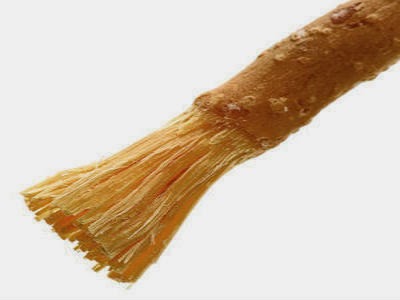
All the way back to around 3500 BC, Egyptians and Babylonians chewed on sticks.  What else did they have to do all day, back before the Internet?  But it turns out that these sticks actually served a purpose.  By chewing on one end until the fibers formed a small make-shift brush, people could clean the surfaces of their teeth.
Then people discovered Miswak, an herbal chewing stick with healing and antiseptic qualities.  In fact, studies prove that Miswak is superior to the present day toothbrush, and many people prefer it even today!  Curious? Try them out! You can buy them online here: (http://www.miswakstick.com/)
Miswak Toothbrush
Animal Hairs
Around 1500, Chinese dentists stole the hairs right off of an animal’s back!  They would pluck hairs off of cold climate pigs and paste them to a bamboo stick or animal bones.
Other primitive versions of the toothbrush include bird feathers, animal bones, porcupine quills, and boar bristles on a bamboo stick.
Animal Hair Toothbrush
The Modern Toothbrush
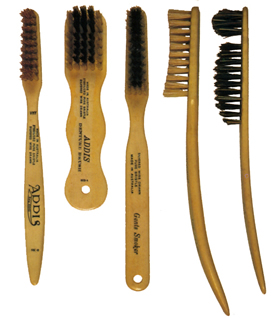
Then William Addis came to save the day.  As an inmate in prison, Addis used bones left over from his dinner and bristles that a generous guard provided him to create a toothbrush.  Upon his release, he refined his invention to use cow tail hair drilled and tied to a cow bone.  He then began mass producing his toothbrush and selling it all over the world.
His company still exists today, although they’ve moved beyond oral hygiene. 
William Addis Toothbrushes
The World Wars
Isn’t it hard to believe that the daily routine of brushing your teeth, as we know it today, began such a short time ago?
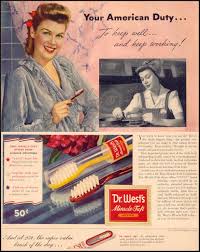
Brushing your teeth only became popular in the US after soldiers returned home.  During the war, our government had strict requirements for soldiers regarding their oral hygiene.  Brushing your teeth was a hard habit to break, and soldiers brought it home with them. 
During the war, bones weren’t always easy to come by, so handles were made from celluloid.  Then, in 1938, a company called DuPont de Nemours introduced the first nylon bristles. DuPont de Nemours used a support-the-troops marketing campaign, and people were hooked.
American Duty 1
Electric Toothbrushes
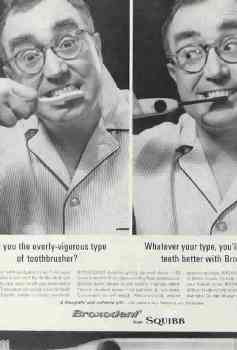
Even though it seems like electric toothbrushes are a more recent fad, the first one was invented in Switzerland in 1939, but it wasn’t introduced to the public market until the 1960s.
Originally, electric toothbrushes were intended for the “overly-vigorous type of toothbrushers.”
Overly Vigorous
What can your toothbrush do?
Today, there are over 3000 patents for toothbrushes, and they can do just about anything you want them to do.
The Oral-B Triumph 9100 with SmartGuide wirelessly transmits a map of your mouth to an LCD display and then tells you where you still need to brush and areas that need more attention.
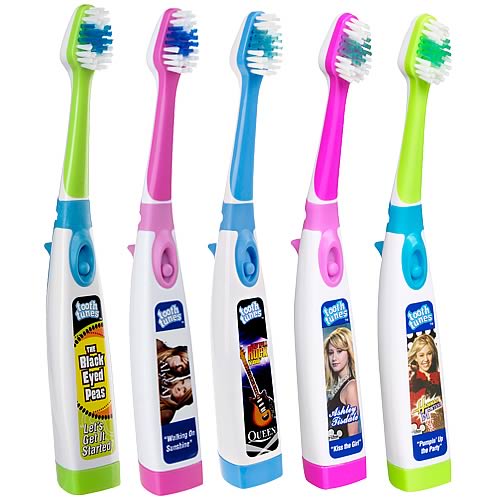
Tooth Tunes uses sound waves to play a song for 2 minutes.  Once the song is over, you know when to stop.
Tooth Tunes
Today, you could spend hours in the toothbrush aisle mulling over all of the choices.  Which toothbrush do you think is the best? Which one gets your kid excited to brush their teeth? Does yours do any cool tricks? 

1-877-Dr Teeth- (360) 740-6212
Town Center Dental
3 Locations - Chehalis, Wa -- Rochester, Wa -- Rainier, Or